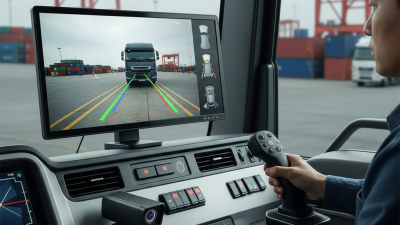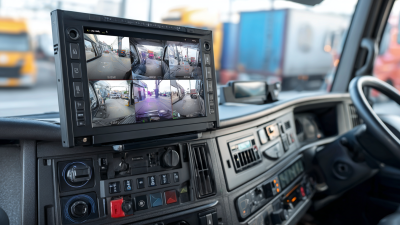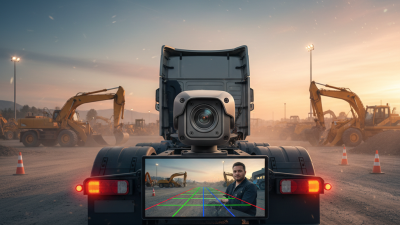
Choosing a reliable Truck Reverse Camera manufacturer in China requires more than comparing product photos and quoted prices. Fleet operators need clear images, stable wiring, strong housings, and dependable support after delivery. A camera mounted behind a loaded trailer faces dust, rain, vibration, and sudden temperature changes. Its performance must remain consistent during early-morning loading and nighttime reversing.
This guide examines China’s top 10 Truck Reverse Camera manufacturers through practical criteria. These include image resolution, infrared night vision, waterproof protection, viewing angles, monitor compatibility, and production experience. It also considers quality control, certification records, customization capability, warranty terms, and technical communication. Small details matter. A secure connector can prevent repeated faults. A bright monitor can reduce blind-spot stress at a crowded warehouse.
No ranking is perfect. Product lines change. Factory capacity can vary. Some published specifications may not explain real performance under heavy vibration or poor lighting. That limitation deserves attention. The strongest manufacturers should provide samples, testing information, installation guidance, and traceable business details. Buyers should request current datasheets and verify claims before placing large orders. A useful comparison must balance technical ability with practical service, not marketing language alone. This overview is designed to support that evaluation and help importers, fleet managers, and vehicle builders identify suppliers with credible experience in commercial vehicle safety systems.
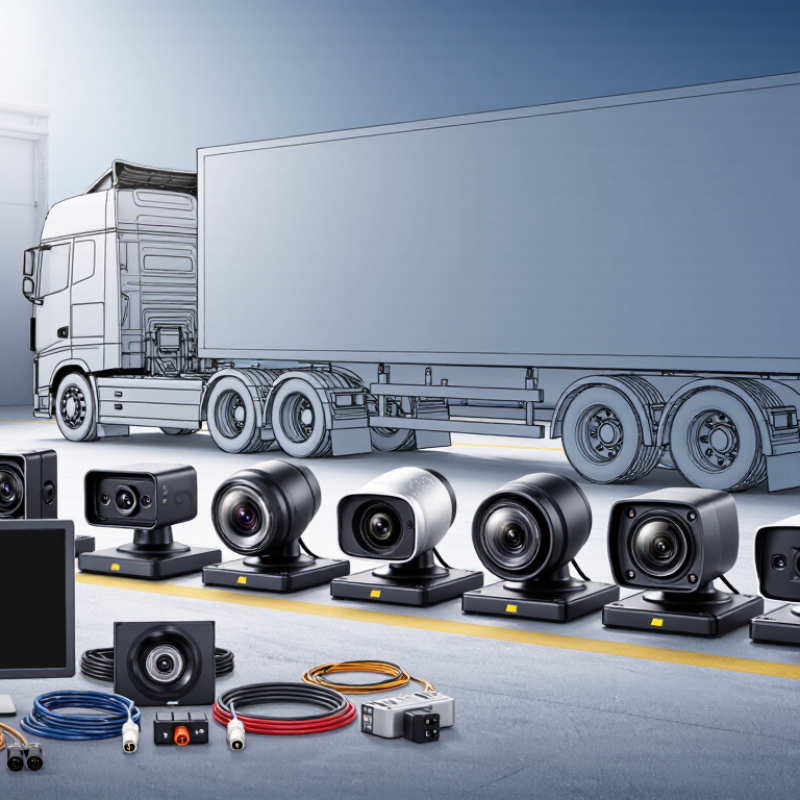
A leading truck reverse camera manufacturer in China must understand the harsh reality of commercial vehicles. Trucks face vibration, rain, dust, temperature changes, and long working hours. A reliable manufacturer tests cameras under these conditions instead of relying only on attractive samples. During production, engineers should check image delay, night visibility, lens sealing, and connector strength. Small failures matter when a driver reverses near a loading dock.
Manufacturing expertise also appears in process control. Professional factories use calibrated testing equipment and inspect every key component before assembly. They should verify waterproof performance, viewing angles, cable durability, and screen compatibility. Clear production records improve traceability when a problem appears. This is practical authority, not just a certificate on a wall. However, no factory gets every detail right. A camera may perform well in laboratory testing but show glare under real warehouse lights. Field feedback remains essential.
Trust also depends on communication. A dependable supplier explains technical limits, installation requirements, and expected service life without exaggerated promises. Engineers should provide sample testing, wiring guidance, and responsive after-sales support. Custom solutions can help fleets with different truck sizes or mounting positions, but customization needs disciplined quality checks. More options are not always better. Consistent performance is better. Buyers should examine inspection reports, production capacity, and long-term testing evidence before choosing among China’s top truck reverse camera manufacturers. Experiences from actual drivers often reveal details that product brochures miss.

Evaluating China’s top truck reverse camera manufacturers requires more than comparing product prices. A reliable assessment begins with factory experience, engineering capability, and documented quality controls. Reviewers should inspect production records, supplier traceability, and sample consistency. One attractive sample proves very little. Long-term field performance matters more.
Testing should reflect real truck conditions. Cameras need clear images in darkness, rain, dust, vibration, and temperature changes. Check viewing angles, image delay, screen compatibility, cable strength, and connector sealing. Independent laboratory reports can support claims, but buyers should verify test scope and dates. Safety-related compliance must match the destination market. Small details matter here. A loose connector can disable an otherwise excellent system.
Evaluation should also include installation guidance, warranty response, spare-part availability, and technical communication. Practical reviewers can install samples on different truck bodies and collect driver feedback. Their scoring should separate image quality, durability, service, and total ownership cost. Weighting remains partly subjective. A fleet operating in harsh mines may value vibration resistance more than appearance. A distributor may prioritize documentation and stable delivery. No manufacturer performs perfectly in every category. Even experienced evaluators should revisit scores after seasonal testing, because laboratory confidence can weaken on muddy roads, during cold starts, or after repeated cleaning.
China’s Top 10 Truck Reverse Camera Manufacturers at a Glance
China’s truck reverse camera sector is expanding with commercial vehicle safety demand. MarketsandMarkets projects the global automotive camera market to reach about USD 13.7 billion by 2029. This growth supports stronger development of heavy-duty reversing systems, not just passenger-car accessories. The top 10 manufacturers should be compared through measurable details: 1080p imaging, night visibility, IP69K protection, wide viewing angles, and response latency below 200 milliseconds. Installation experience matters too. A clear image is useless when a cable loosens after months of vibration.
For fleet buyers, supplier evaluation should include salt-spray testing, waterproof connector design, operating temperatures, and replacement lead times. Reports from the International Organization of Motor Vehicle Manufacturers show commercial vehicles remain essential to global freight movement, increasing demand for dependable driver-assistance equipment. China’s leading suppliers often provide customized monitor sizes, multi-camera layouts, and reinforced housings for dump trucks, trailers, and buses. Some systems perform well in warehouses but struggle in rain or harsh sunlight. That weakness deserves attention. A top-ten list can change quickly because pricing, sensor sourcing, and quality control are not always consistent. Independent sample testing, documented inspection records, and field feedback provide more reliable evidence than catalog claims.
| Rank | Anonymous Supplier Profile | Primary Product Positioning | Typical Video Resolution | Night-Vision Capability | Ingress Protection | Operating Temperature | Typical Viewing Angle | Common Video Interface | Typical Compliance Focus | Suitable Truck Applications | Procurement Strength |
|---|---|---|---|---|---|---|---|---|---|---|---|
| 1 | Supplier Profile A | Heavy-duty OEM Integrated camera and monitor systems |
720p to 1080p | Infrared LEDs, approximately 10–20 m | IP69K camera housing | -30°C to +70°C | 120°–150° diagonal | AHD, CVBS, optional IP video | Automotive EMC and environmental testing | Tractors, trailers, refuse trucks, construction vehicles | High customization |
| 2 | Supplier Profile B | Fleet safety Reverse cameras with DVR compatibility |
1080p | Low-light sensor with infrared support | IP67 to IP69K | -20°C to +70°C | 100°–140° diagonal | AHD and CVBS | RoHS, CE, automotive EMC focus | Logistics fleets and urban delivery trucks | Strong fleet integration |
| 3 | Supplier Profile C | Wireless systems Digital wireless rear-view solutions |
720p to 1080p | IR illumination, approximately 8–15 m | IP66 to IP69K | -20°C to +65°C | 110°–130° diagonal | Digital wireless, AHD options | Radio performance and vibration testing | Rigid trucks, vans, agricultural vehicles | Fast retrofit installation |
| 4 | Supplier Profile D | Ruggedized cameras Metal-housing cameras for harsh environments |
1080p | High-sensitivity CMOS with IR support | IP68 to IP69K | -40°C to +80°C | 90°–130° diagonal | AHD, TVI, CVI, CVBS | Salt spray, vibration, waterproofing tests | Mining trucks, dump trucks, off-road equipment | Excellent environmental durability |
| 5 | Supplier Profile E | Cost-efficient OEM Standard camera and monitor kits |
720p to 1080p | Basic infrared night vision | IP67 | -20°C to +60°C | 100°–140° diagonal | CVBS and AHD | RoHS and CE documentation | Light trucks, buses, commercial fleets | Competitive pricing |
| 6 | Supplier Profile F | Multi-camera systems Four-camera surround and blind-spot packages |
1080p per channel | Digital low-light enhancement | IP67 to IP69K | -30°C to +70°C | 100°–150° diagonal | AHD, network video, proprietary DVR | EMC, vibration, and multi-channel validation | Long-haul trucks, buses, articulated vehicles | Broad system scalability |
| 7 | Supplier Profile G | Smart monitoring Camera systems with recording and driver display |
1080p to 2MP | HDR and infrared-assisted imaging | IP67 | -20°C to +70°C | 105°–140° diagonal | IP video, AHD, USB recording options | Fleet-data security and EMC testing | Connected logistics and fleet-management projects | Good software integration |
| 8 | Supplier Profile H | OEM replacement Replacement cameras for commercial vehicles |
720p to 1080p | Infrared LEDs, approximately 10 m | IP67 to IP68 | -20°C to +65°C | 90°–120° diagonal | CVBS and AHD | RoHS, CE, and connector compatibility | Fleet maintenance and aftermarket replacement | Broad model compatibility |
| 9 | Supplier Profile I | Special-purpose vehicles Camera solutions for industrial and municipal fleets |
720p to 1080p | IR or white-light assistance | IP68 to IP69K | -30°C to +70°C | 110°–150° diagonal | AHD and CVBS | Waterproofing, impact, and vibration testing | Street sweepers, waste trucks, utility vehicles | Application-specific engineering |
| 10 | Supplier Profile J | Entry-level export Basic reverse-view camera kits |
720p | Standard infrared night vision | IP67 | -20°C to +60°C | 100°–120° diagonal | CVBS and AHD | Basic CE and RoHS documentation | Small fleets, trailers, pickup trucks | Low initial cost |
China Top 10 Truck Reverse Camera Manufacturers?
Comparing truck camera manufacturers requires more than checking product catalogs. I inspect image clarity, mounting strength, cable protection, and monitor response during real vehicle tests. A useful camera should show a loading dock clearly at night, not only under showroom lighting. Look for infrared night vision, wide dynamic range, low-latency video, and sealed housings rated for rain, dust, and vibration.
Key products usually include standard rear cameras, multi-camera systems, side-view units, and trailer-compatible monitors. Analog HD systems can offer stable performance over long cables. Digital systems may provide sharper images and easier expansion. However, image quality depends on the complete system, including connectors, cable length, and display processing. Ask for measured viewing angles, operating temperatures, waterproof test records, and sample footage from moving trucks.
Customization separates capable suppliers from simple resellers. Check whether they can adjust bracket dimensions, lens angles, cable lengths, connector types, screen layouts, and camera housings. Some projects need heated lenses for cold regions. Others require compact metal housings for refuse trucks or construction vehicles. I recommend requesting a pilot batch before volume production. One overlooked detail is installation time. A technically excellent camera becomes costly when technicians need extra drilling or adapters. My own evaluations are not perfect; I once focused too heavily on resolution and underestimated glare from wet roads. That mistake still shapes my comparison checklist.
Aggregated comparison of commonly specified capabilities across a 10-supplier evaluation framework
The chart compares practical selection dimensions for truck reverse-camera suppliers, including image resolution, video standards, environmental protection, low-light performance, multi-camera support, and customization capability. Higher values indicate broader availability within the comparison framework.
China Top 10 Truck Reverse Camera Manufacturers? How to Choose the Right Chinese Truck Camera Manufacturer
Choosing a Chinese truck camera manufacturer requires more than comparing catalog prices. MarketsandMarkets’ 2024 Automotive Camera Market report identifies commercial vehicles as a major growth application through 2029. That growth attracts capable factories, but also inexperienced suppliers. Request factory audit records, production photos, and traceable test results. A polished website proves very little.
Check performance under real operating conditions. For refrigerated trucks, ask for stable operation below -20°C and above 70°C. Require at least IP69K protection for cameras exposed to pressure washing. Confirm night images using a dim loading yard, not only a showroom. Measure video delay, viewing angle, connector strength, and screen readability. UNECE Regulation No. 158 highlights the importance of reversing visibility and detection systems. Compliance evidence should come from an accredited laboratory, not a sales promise.
I would also inspect sample units from different production batches. One excellent sample is not enough. Ask about lens sealing, cable bending tests, EMC testing, and warranty failure rates. A manufacturer should provide firmware control and clear replacement procedures. Low prices can hide fragile connectors or inconsistent sensors. I have learned this the hard way. Delivery speed matters too, but rushed inspection creates bigger costs later. A reliable supplier explains limitations openly, even when the answer is inconvenient.