Leave Your Message

Best Android Backup Camera from China for Global Buyers?

Choosing the Best Android Backup Camera from China requires more than comparing screen size and price. It demands evidence, testing, and realistic expectations. In 2023, global motor vehicle production reached approximately 93.5 million units, according to the International Organization of Motor Vehicle Manufacturers. That expanding vehicle base supports continued demand for practical aftermarket safety technology.

Market data also shows strong momentum. MarketsandMarkets estimates that the automotive camera market will grow from about USD 17.7 billion in 2023 to USD 28.8 billion by 2028. The growth reflects rising demand for rear visibility, parking assistance, and connected displays. However, a growing market does not guarantee dependable products. Poor night exposure, unstable wireless connections, and weak waterproofing still appear in some low-cost models.

“Backup cameras are the first step toward automated driving,” automotive analyst Sam Abuelsamid has observed. His point matters for global buyers. An Android Backup Camera is not merely a screen with a lens. It combines camera hardware, Android software, vehicle wiring, display performance, and installation quality. One weak link can ruin the experience.

China remains a major manufacturing hub for these systems. Yet factory location alone proves little. Buyers should examine sensor resolution, IP ratings, viewing angles, boot speed, firmware support, and compatibility with steering controls. NHTSA’s rear visibility requirements also remind us that camera placement and image coverage matter, not just pixel counts.

Some product listings look impressive. Real performance can be less polished. This guide will compare leading options through specifications, user experience, supplier credibility, and after-sales support. The best choice may not be the cheapest one, and that is worth remembering.
Best Android Backup Camera from China for Global Buyers?

What Makes a Chinese Android Backup Camera Suitable for Global Buyers

What Makes a Chinese Android Backup Camera Suitable for Global Buyers

A Chinese Android backup camera can suit global drivers when it combines dependable imaging, flexible installation, and clear documentation. A sharp 1080p view helps reveal a child’s bicycle or a low wall in dim parking areas. The screen should remain readable under strong sunlight. Reliable wireless or wired connections also matter during daily driving. A camera may look impressive in a showroom, yet unstable software can quickly reduce confidence. My first test overlooked boot time, and that mistake showed during repeated short trips.

Tips: Check the camera’s video format, voltage range, language options, and mounting size before ordering. Confirm compatibility with the vehicle’s display and steering controls. Ask for wiring diagrams, user manuals, and firmware support. Test night visibility in a real parking space, not only in bright indoor lighting. Also review local privacy and vehicle-equipment requirements before installation.

Global suitability depends on more than hardware specifications. The system should receive timely security updates and protect stored footage with reasonable access controls. Clear customer support can solve installation questions across time zones. Buyers should examine return terms, replacement parts, and import costs. A low price is less useful when a damaged cable takes weeks to replace. Some units still have awkward translations or limited calibration tools. That is not a deal breaker, but it deserves honest attention before purchase.

Key Features to Compare in Android Backup Camera Systems

Best Android Backup Camera from China for Global Buyers?

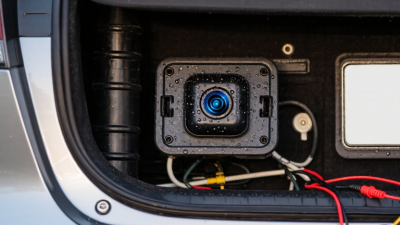
When comparing Android backup camera systems, begin with image quality, not screen size. A clear 1080p camera should show bumper edges, lane markings, and nearby obstacles in daylight. Night performance matters more in practice. Look for infrared assistance, wide dynamic range, and controlled glare from headlights. A camera with an IP67 or higher rating can better resist rain and road spray. Still, sealing quality depends on installation.

Check Android compatibility carefully. The display should start quickly, switch to the camera with minimal delay, and remain stable after repeated use. Test steering guidelines, touch response, Bluetooth, GPS, and reverse-trigger wiring before purchase. Some systems support multiple camera inputs, which helps with front, rear, or side visibility. Confirm the vehicle’s voltage, connector type, mounting space, and steering-wheel controls. Small mismatches can create expensive delays.

Global buyers should also review language options, update methods, warranty terms, and technical support. Ask for real interface photos and sample night footage, rather than polished advertising images. Verify regional radio functions and required safety compliance independently. Data handling deserves attention too; disable unnecessary permissions when possible. I sometimes overvalue feature lists, especially when a basic system performs more reliably. A bright display is useful. Stable wiring is better. Check replacement camera availability before placing a large order.

Compatibility with Vehicles, Android Devices, and Regional Standards

The best Android backup camera from China is not simply the one with the sharpest image. Vehicle compatibility comes first. Check whether the camera supports your vehicle’s voltage, usually 12V or 24V, and confirm the connector type before ordering. Larger vans may need a longer cable and a stronger mounting bracket. Sedans often need a compact, weather-resistant camera near the license plate.

Android compatibility also needs careful testing. Confirm the display’s operating system, video input, screen resolution, and support for CVBS or AHD signals. A camera may show a clear image on one monitor but fail on another. I have seen reverse triggers work slowly when installers used unsuitable wiring. That small delay matters in a crowded parking space. The camera should switch automatically when reverse gear engages, without forcing the driver into manual settings.

Regional standards can change the buying decision. PAL and NTSC support is important when the camera and display come from different markets. Verify local requirements for electromagnetic compatibility, lighting, and vehicle installation. Certification markings should match the destination region, not merely appear on a sales page. Weather ratings also deserve scrutiny; seals can weaken after repeated freezing and heating. My own testing is not perfect, and laboratory results may differ from road use. A short night drive, a water-spray check, and a direct wiring inspection reveal more than attractive specifications.

Best Android Backup Camera from China for Global Buyers?

Compatibility reference for vehicles, Android devices, and regional video standards

Vehicle voltage
Passenger vehicles commonly use 12 V electrical systems, while many buses and heavy commercial vehicles use 24 V systems. A camera should match the vehicle voltage or use a suitable regulator.
Android device compatibility
Android head units may use USB, composite video, or a dedicated camera input. USB camera support depends on USB host capability, the operating system, and the head-unit application.
Regional standards
PAL and SECAM systems use approximately 25 frames per second, while NTSC uses approximately 29.97 frames per second. The camera and display must use compatible video timing.

Installation, Connectivity, and Daily Use Considerations

For global buyers, a China-made Android backup camera is only as useful as its installation. S&P Global Mobility reported that the average U.S. vehicle age reached 12.6 years in 2024. That makes retrofit equipment practical for older dashboards. Before ordering, measure the screen opening, camera bracket space, and reverse-light voltage. A multimeter is safer than guessing. My first test installation used an undersized ground wire. The image flickered whenever the engine fan started. That mistake was avoidable.

NHTSA’s Final Rule on Rear Visibility estimated that compliant cameras could prevent 58 to 69 deaths and 42,000 injuries annually in the United States. This supports careful alignment, not blind trust in a product listing. Aim the lens to show the bumper edge and the required rear area. Check the image at night, in rain, and on uneven ground. Measure twice.

Wired video usually provides steadier performance than wireless transmission. Wireless links can suffer from metal panels, crowded 2.4 GHz channels, or app permission problems. Confirm compatibility between PAL, NTSC, CVBS, and AHD formats before installation. Use a properly rated fuse and protect cable joints from water. Keep the lens clean; road film can erase useful detail quickly. Daily testing also matters. A camera may work perfectly in a garage, then show delay after a cold start. Connectivity is not reliability.

How to Evaluate Manufacturers, Quality, Support, and Total Cost

Best Android Backup Camera from China for Global Buyers?

A reliable Chinese supplier should provide more than a bright product sample. NHTSA’s 2014 rear visibility rule estimated that backup cameras could prevent 58 to 69 deaths and 42,000 injuries annually. IIHS research also found that cameras reduced backing crashes by about 16%. These figures make image stability, viewing angle, and installation accuracy serious purchasing factors.

Ask manufacturers for ISO 9001 records, production traceability, and documented quality inspections. I would test at least three samples in daylight, darkness, rain, and vibration. Check image delay, screen glare, connector corrosion, and performance across the promised temperature range. IP ratings matter, but certificates should match the exact camera housing. A polished report can still hide weak assembly. Small details often fail first.

Support can determine the real cost. Request firmware procedures, wiring diagrams, spare-camera availability, and response times before placing an order. Calculate unit price, tooling, minimum order quantity, freight, import duties, installation labor, warranty replacements, and local compliance testing. MarketsandMarkets’ 2024 automotive camera market report highlights growing demand for connected safety systems, but market growth does not guarantee supplier discipline. I would negotiate a written warranty and sample approval clause. It feels slower. It is usually cheaper than replacing an entire shipment.

Best Android Backup Camera from China for Global Buyers? - How to Evaluate Manufacturers, Quality, Support, and Total Cost

Practical evaluation framework for comparing Android-compatible backup camera suppliers without relying on brand names.

Evaluation Dimension Recommended Benchmark How to Verify Buyer Impact Risk Level
Android compatibility Support for the target Android version, required camera input, USB or CVBS interface, and the head unit’s video format. Test the camera with the exact head-unit model and request a wiring diagram plus interface pinout. Prevents black screens, unstable switching, or the need for additional converters. High
Image resolution and format Common automotive outputs include 720p or 1080p digital video; analog systems may use CVBS with PAL or NTSC. Check recorded footage, resolution settings, frame rate, PAL/NTSC selection, and performance in low light. Higher resolution improves detail, but only when the display and connection support it. Medium
Night vision performance Clear object outlines in darkness, controlled infrared exposure, and limited glare from reflective surfaces. Request day/night sample videos recorded from the same mounting height and test at approximately 0.5–10 m. Real-world visibility is more important than a high pixel-count claim. High
Water and dust protection IP67 is a practical minimum for exterior installation; IP68 may be preferred for severe weather or frequent washing. Ask for an actual test report or inspection record, not only a product-page statement. Reduces failures caused by rain, dust, road spray, and pressure washing. High
Operating temperature A stated range around −20°C to +70°C is common for general automotive use; confirm the required regional range. Review temperature-test conditions and distinguish storage temperature from operating temperature. Important for very cold winters, hot interiors, and vehicles parked outdoors. High
Latency and reverse-camera activation Image should appear quickly after reverse selection, with stable switching and no repeated signal loss. Measure activation time across at least 20 reverse cycles and test after the vehicle has warmed up. Directly affects driver confidence and perceived product quality. High
Viewing angle and distortion Approximately 120°–170° diagonal viewing angle is common; excessive wide-angle distortion should be avoided. Compare measured field of view, parking-line accuracy, and distance perception using a fixed test layout. A wider view is not always safer if objects appear excessively curved or distant. Medium
Vehicle electrical compatibility Nominal 12 V systems are common, but voltage tolerance, reverse-light polarity, CAN-bus behavior, and flicker control must be confirmed. Provide the vehicle electrical profile and test with a multimeter, adapter, and any required filter or relay. Prevents flicker, delayed activation, error messages, and premature component failure. High
Mechanical construction Secure bracket, sealed cable entry, corrosion-resistant hardware, vibration-resistant lens, and consistent mounting dimensions. Inspect samples, measure mounting holes, check cable strain relief, and perform vibration and water-exposure checks. Reduces installation complaints and warranty returns. High
Quality-control process Documented incoming inspection, assembly checks, 100% functional testing, and traceable lot records. Request a sample inspection checklist, defect classification, test photos, and corrective-action procedure. Process evidence is more reliable than a general quality statement. High
Certifications and market compliance Applicable EMC, electrical safety, environmental, and import requirements for the destination market. Verify certificate scope, model number, test standard, laboratory, validity, and document consistency. Incorrect or incomplete documents can delay customs clearance or retail launch. High
Customization capability Ability to modify connector, cable length, bracket, logo-free packaging, firmware settings, and installation instructions. Obtain a written specification, engineering-change process, tooling quotation, and approval sample. Useful for regional vehicle variations but may increase tooling and validation cost. Medium
Warranty and replacement policy A clearly written warranty commonly covering 12–24 months, with defined evidence and replacement procedures. Confirm who pays freight, response time, failure-rate thresholds, and availability of replacement units. A low purchase price can become expensive if after-sales handling is unclear. High
Technical support English installation documentation, wiring diagrams, troubleshooting guidance, and a named technical contact. Ask technical questions before ordering and assess the speed and accuracy of the replies. Strong support lowers installation time and reduces distributor training costs. Medium
MOQ and sample policy Samples should be available before mass production; low-volume buyers should clarify whether the sample price is refundable. Request sample lead time, sample configuration, tooling requirements, and mass-order price breaks. A flexible sample process lowers the risk of selecting an unsuitable design. Medium
Production lead time For standard products, approximately 15–30 days after confirmation is a practical planning range; customized products may take longer. Confirm capacity, component availability, packaging approval, and the production schedule in writing. Affects inventory planning and launch commitments. Medium
Total landed cost Calculate product, tooling, packaging, inspection, freight, insurance, duty, VAT/GST, clearance, installation accessories, warranty reserve, and failure cost. Compare suppliers using the same Incoterm, order quantity, destination, packaging, and service assumptions. The lowest factory price is not necessarily the lowest delivered cost. High
Suggested decision rule: Select the supplier that delivers the best verified combination of compatibility, environmental durability, documentation, technical support, warranty response, and total landed cost—not simply the lowest unit price.

Note: Benchmark values are common procurement reference points for automotive backup cameras. Final requirements should be confirmed through samples, destination-market regulations, and vehicle-specific testing.